
If you're reading this, you might have that itch to start something of your own.
You're doing okay, so you hesitate to leave your steady job.
I get it. I've been there.
As Nassim Taleb puts it, a monthly salary is one of the most harmful addictions, right up there with heroin.
I've done side hustles myself and learned some valuable lessons, but my view on them has completely changed.
My personal experience
I love pranks and making people laugh.
Especially with props. Scary masks, fake insects, exploding golf balls. I'm into it.
In the early 2010s, getting this stuff into Australia was expensive. You would pay a $20 import fee for a $5 mask. I had to find cheaper laughs.
Seeing the opportunity to bulk-import the stuff from China…
- I built a website with Shopify.
- Housed the inventory in my apartment.
- Bought traffic from AdWords (now Google Ads).
- Packed the orders at night.
- Dropped them off before my day job.
It worked.
I got to cut my teeth in business, and when we left Australia in 2014, we sold it on Flippa for a small sum.
But I wouldn't do it again.
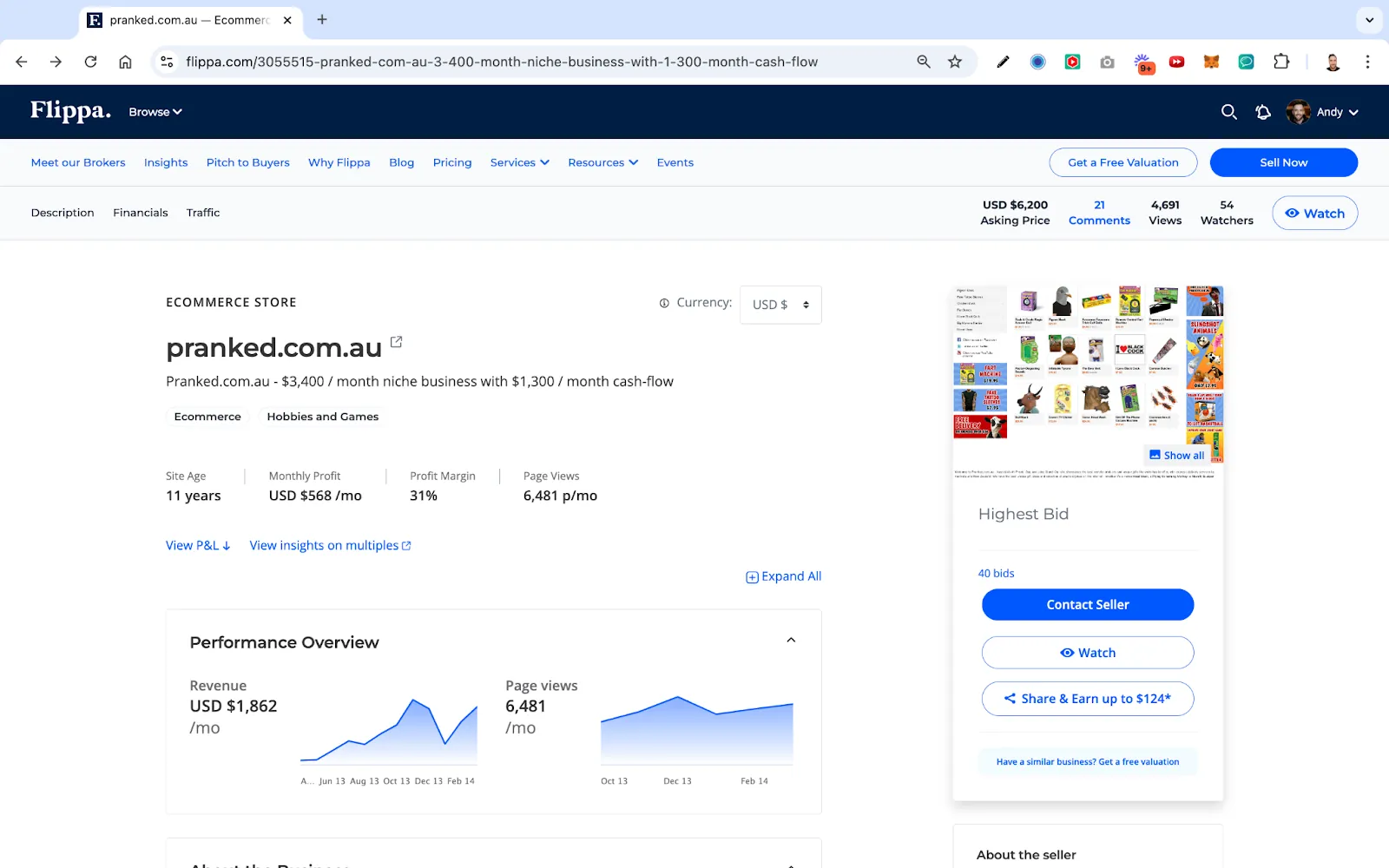
The experiences taught me a tonne about websites and e-commerce. The main one was valuing my time.
We would profit from every order, but those 5-10 hours a week on this side hustle could have gone to something bigger and more lucrative.
It made a few hundred extra bucks a week. But that didn't help with my main hustle, the one that secured my family and future.
After that side hustle, my answer whenever people asked me about one was 'don't waste your time'.
Your main hustle (i.e. your full-time job) is way more important. That's the thing that pays the bills and keeps you secure.
But I've changed my view over the years. I was wrong.
Side hustles have a significant role. The key is knowing how to approach them the right way.
1. Explore, but pay the bills
The first thing is a mindset shift.
Your side hustle isn't about making extra money on the side. The real goal is to explore in the hope that the side hustle becomes the main hustle.
The main hustle = security. Your 9-to-5 pays the bills. It gives you the safety net to explore ideas.
The side hustle = exploration. This is where you experiment, learn, and build something that could one day replace your day job.
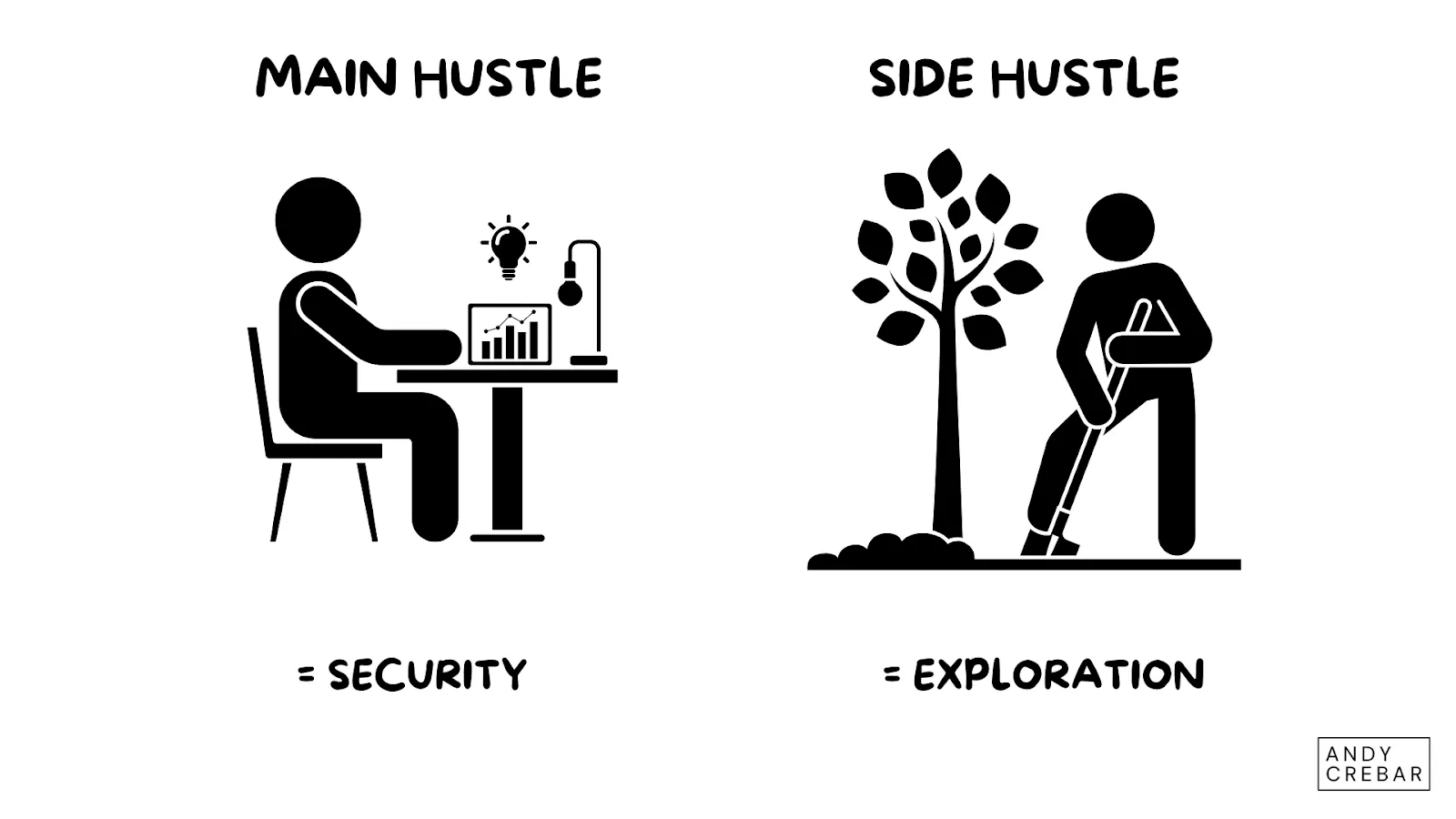
This is a significant difference. It should stop you from getting involved in side hustles that only make a few extra bucks, and focus you instead on big things that have the opportunity to one day fund your lifestyle and future.
What this means is that at all times, the main hustle is the priority. You need to succeed in that above all else.
2. Expect to work hard
If you're serious about making your side hustle your main hustle, it's going to take a huge amount of time and energy.
I don't know any top performers who don't work hard. Yes, they work smart, but the world is a competitive place, and we need to work hard AND smart.
Many top performers work well over 50 hours a week. Here's roughly how working hours split across the population.
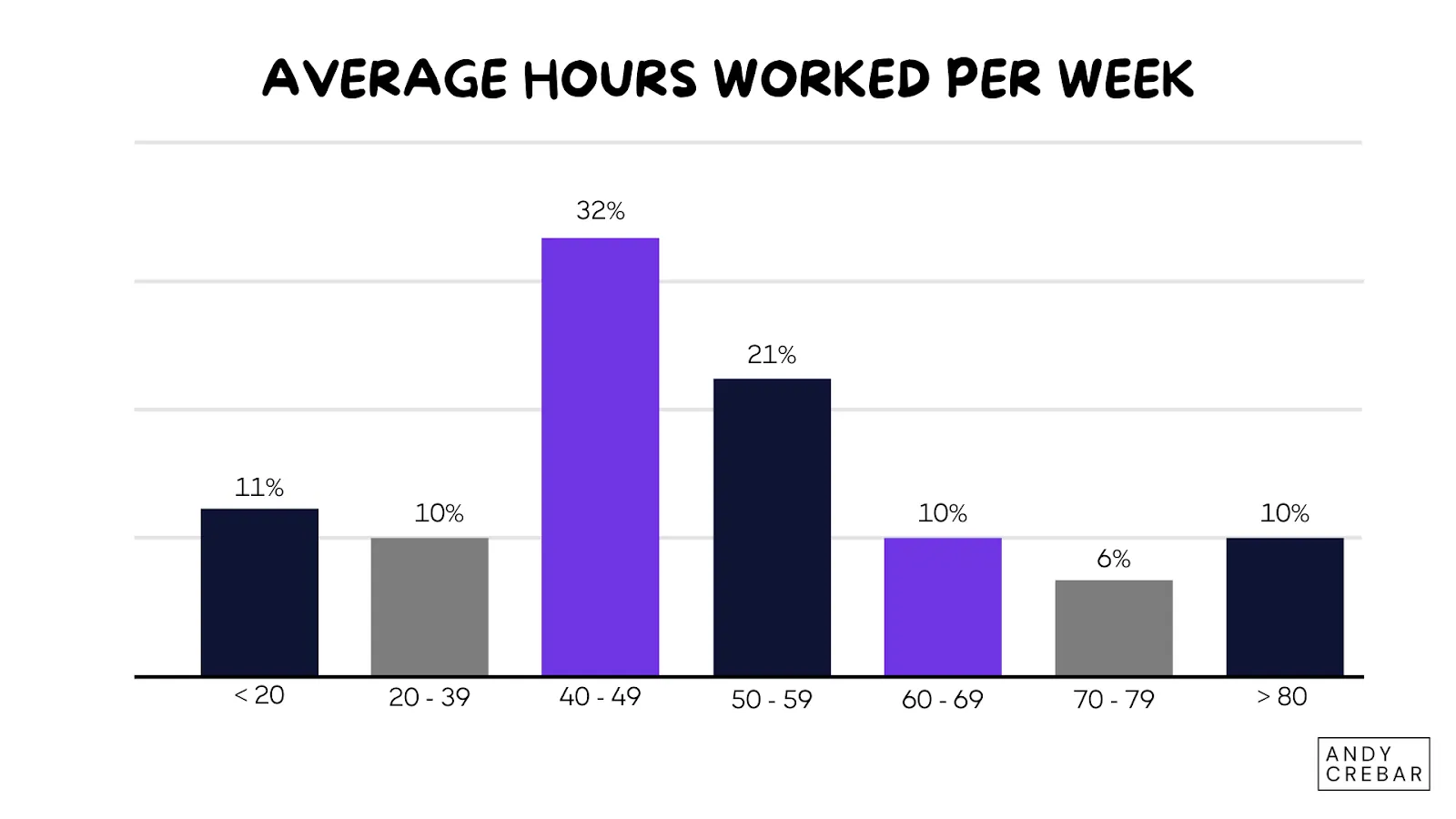
My point is, you shouldn't expect to get there within a few hours here and there.
You likely face competition from people who have your side hustle as their main hustle.
To make real progress, you must find time each week for your exploration, and it should be consistent and focused.
3. Start solving problems
The most important step to getting a side hustle off the ground is to start doing the thing.
If you want to consult, start consulting.
If you want to start an e-commerce store, get the website live.
You don't wait for the "perfect" idea or time to begin.
If you're not sure what problems to solve, the easiest hack is to look at what people are already asking for.
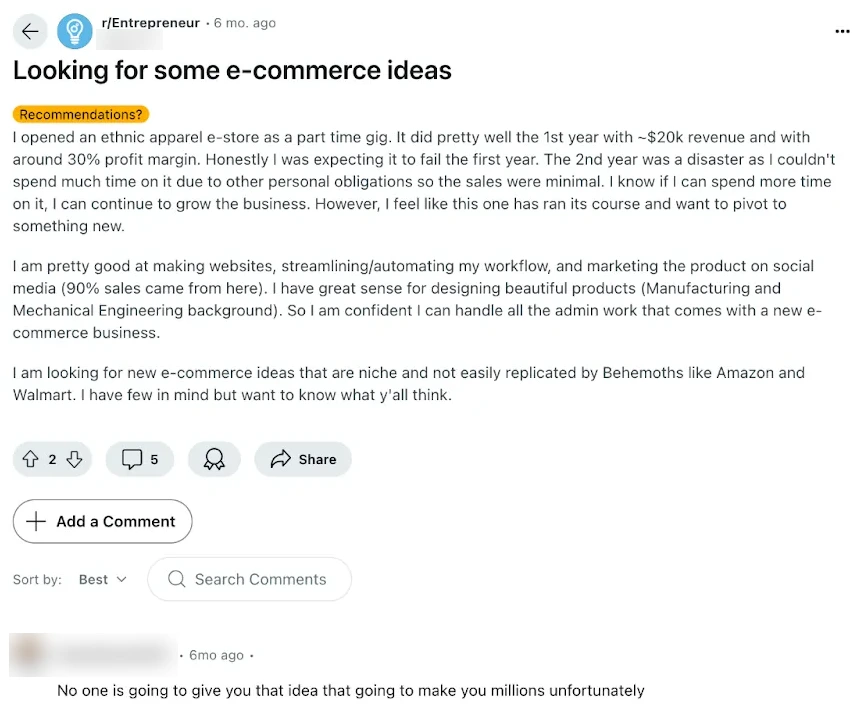
If you go on Reddit and look around, you'll find all sorts of people talking about ideas and asking for solutions to their problems. You need to tap into that.
No one will give you the answer, but it can help you find problems to solve.
4. Commence hand-to-hand combat
If you're working for XYZ company and also trying to build a side hustle, people might get confused.
You need to be clear about your intentions when approaching anyone in your network.
That's why hand-to-hand combat works best.
As a founder, you have a strategic advantage here. While people don't want anyone to sell to them, they do want to help.
Asking for a meeting to 'get their advice' is far more fruitful. People like being asked for advice.
Contact potential customers or connections through outbound messages. This can be as simple as sending DMs, emails, or LinkedIn messages.
Most will ignore you. But sometimes, someone will engage. They may offer valuable insights or feedback.
If you solve a painful problem, the conversation will naturally shift to how they can become a customer. If not, that's fine - use their input to keep learning.
5. Manage your responsibilities
If you're going to explore something on the side, the hardest part is balancing your side hustle with your main hustle.
Doing two things at once is hard on your identity. I've been there - it can feel disingenuous to split your focus.
Take the time to explore, but remember this. You need to keep your priorities straight.
If your side hustle affects your main job, you must choose:
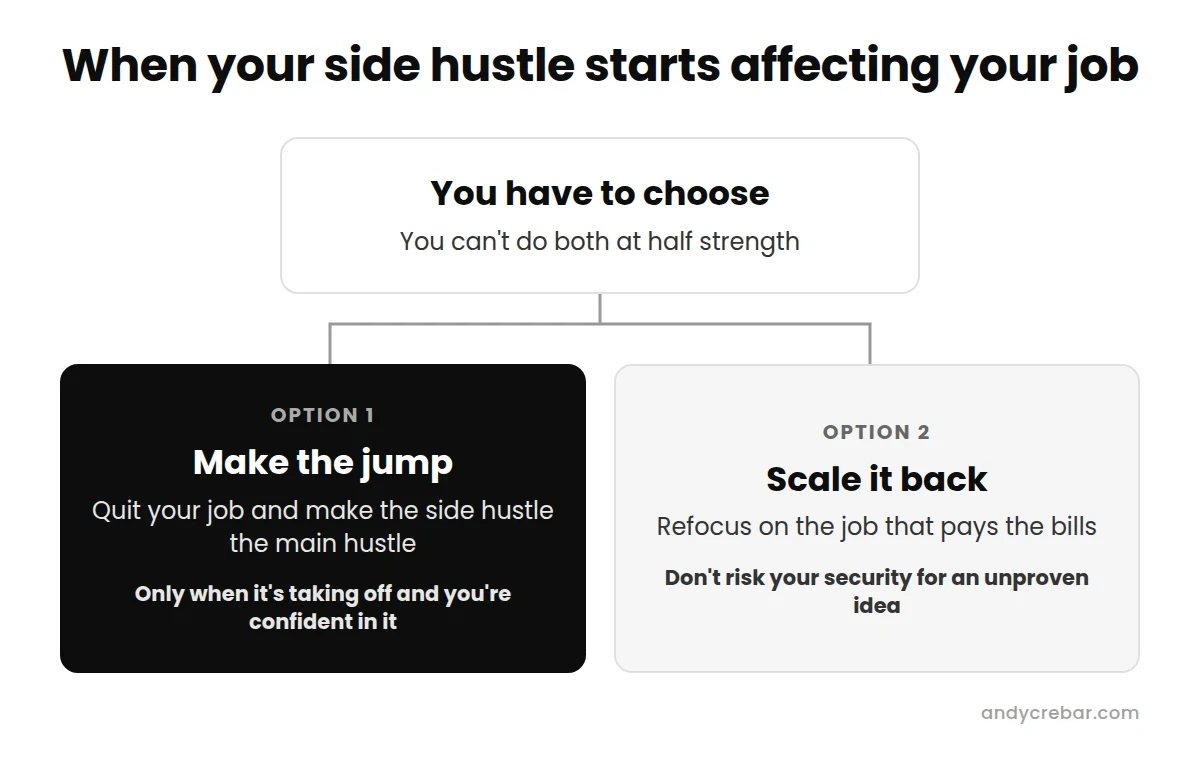
- Quit your job and make the side hustle the main hustle.
- Scale back the side hustle and refocus on your main job.
You owe it to your employer and team to be all in and kicking goals for the company.
If your 9-to-5 is what's paying the bills, don't jeopardise that for an unproven idea. The most important thing is to keep yourself and your family secure.
If the side hustle starts taking off and you're confident in its potential, then make the jump.
Good luck.