
Issuing equity can transform a startup.
It gets everyone aligned with skin in the game. The shot at financial freedom.
But in the early days, the lines of who gets what can be blurry and fraught with risk.
Is this person a co-founder? What vesting schedules should we use? How much is enough?
Here’s where I’ve made mistakes, and seen other founders mess it up too.
1. Confusing Co-Founders with Key Contributors
Not everyone needs to be a co-founder. Not everyone should be a co-founder.
In venture-backed startups, co-founders have a strict definition. Full time, committed to the next decade, and crucial to the business's success.
These people should get double-digit equity. Nobody else does.
The problem is that some people really are vital to your company’s success, but they’re not shaping the company’s vision. They’re executing. And that’s a different kind of equity conversation.
There may even be people who were there from the very beginning but are not co-founders.
Before you give away equity, ask yourself if this person is truly a co-founder or a key contributor.
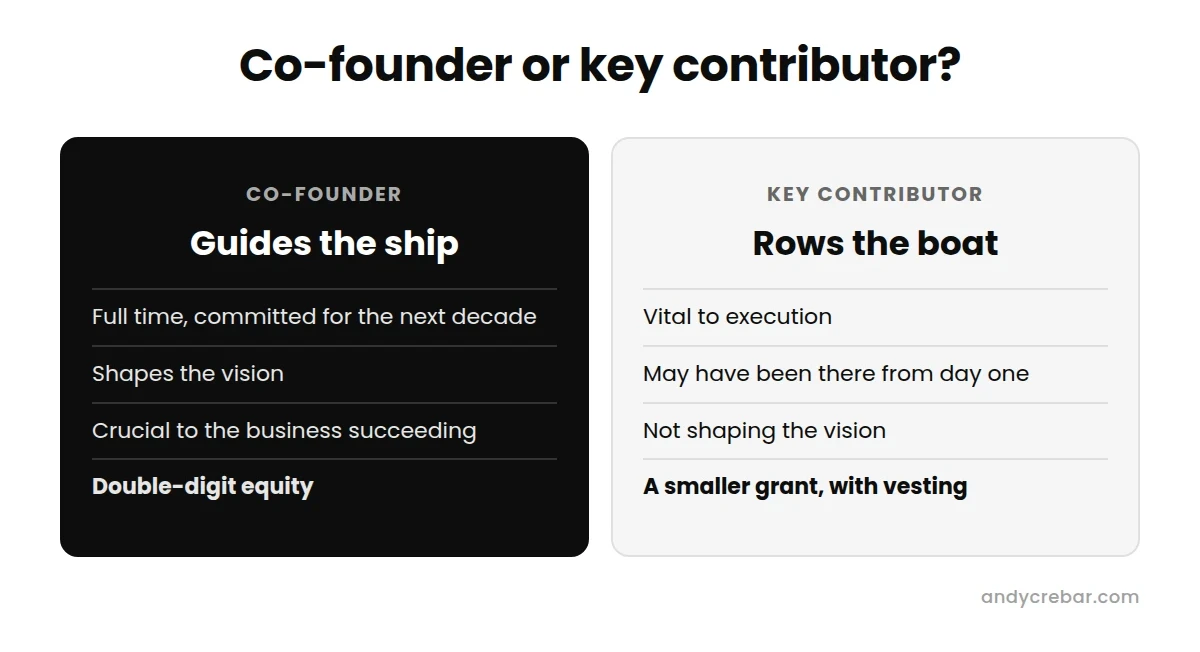
Co-founders help guide the ship. Contributors row the boat.
2. Assuming you can do it all yourself
On the flip side, it's important to understand your own value and significance. This includes a self-review.
There's no point hoarding equity in a company that never gets off the ground because you don’t have all the skills and capabilities the vision needs. Be realistic and put your ego to the side.
Investors are wary of solo founders. Paul Graham has long argued that choosing your co-founders is one of the most important decisions you'll make.
The journey is long and treacherous, and startups with a single founder tend to have lower success rates.
The right co-founders can be the difference between burning out and pushing through.
3. Skipping the Trial Period
Equity is a long-term relationship.
Think of it like a marriage. You wouldn’t propose to someone without dating them first.
You need a trial period to get to know each other and see if it's a fit. So before offering equity, work with them on a trial basis.
If everyone’s going full time, you’ll know pretty quickly if it’s a fit (like within weeks).
If they’re the right fit, then talk equity. If they’re not, you’ve saved yourself a lot of hassles.
4. Not having a Vesting Schedule
If you give someone equity upfront without vesting, and if they leave six months later, you’re stuck.
They walk away with a chunk of your company. You can’t get it back.
Every equity grant needs a vesting schedule. The most common for employees is a four-year vesting period with a one-year cliff.
Vesting starts at day 1, then at 12 months the cliff is reached and 25% of the equity vests. After that, the remaining equity vests monthly to 48 months.
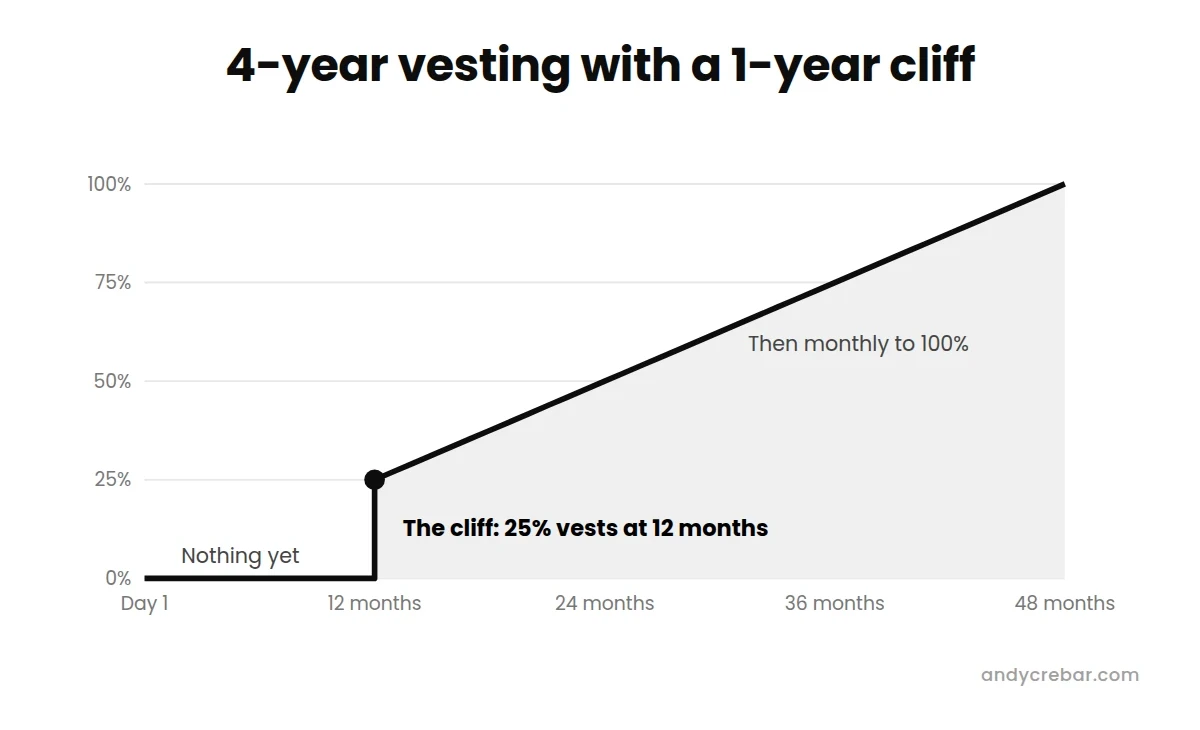
This way, no one gets anything until they have been around for at least a year. Then they start vesting their shares.
48 months isn’t the end. Normally there will be equity refreshes in years 3 and 4 to keep the best people incentivised for the journey ahead.
5. Using Milestone-Based Vesting
On paper, milestone-based vesting looks smart. Hit a goal, get equity.
But the problem is that startups are chaotic. Milestones shift. New priorities come up.
Tying equity to something that changes is a recipe for disaster.
Incentives get misaligned and people end up rowing in different directions.
Time-based vesting (see above) is cleaner, simpler, and more adaptable to a startup's chaos.
People still earn their equity over time. But, it's not tied to arbitrary goals that may not make sense six months from now.
6. Avoiding Tough Equity Conversations
Nobody likes uncomfortable conversations. But pushing off the equity discussion may bring resentment later.
You don’t want someone thinking they’re getting 20%, only to find out you were planning to offer them 5%.
Have the hard conversations early. Be clear about the equity split. Explain why it's structured that way and how it can change over time.
Better to hash it out now than to deal with the fallout later.
7. Over-Diluting Your Own Equity Too Early
When you’re building a team, it’s easy to start giving away equity like candy.
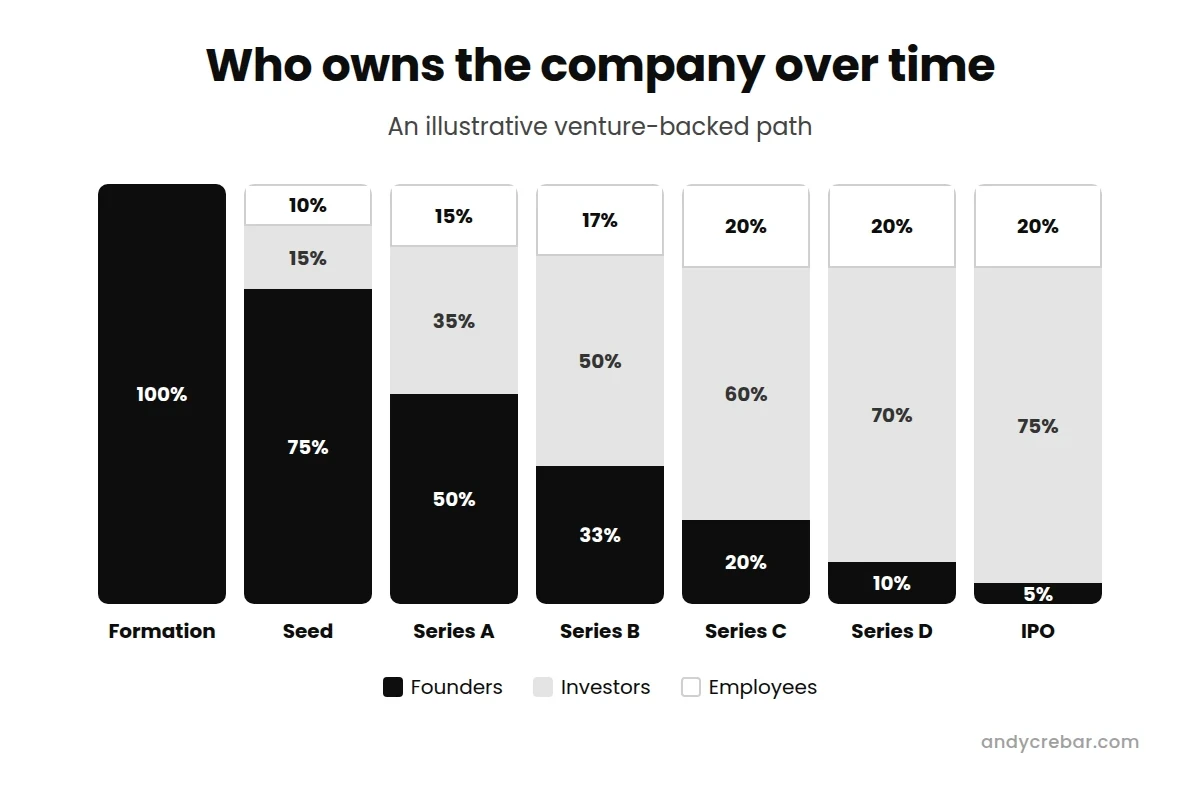
You think more equity = more commitment. But if you’re not careful, you end up giving away too much, and your stake in the company gets diluted. Fast.
If you’re raising multiple rounds of capital, you and the existing shareholders will take a hit every time.
Even the founders who take their company all the way to IPO often end up with a single-digit share of the pie.
How to Get It Right
Now that you know these 7 fatal mistakes founders make when issuing equity, let’s flip it around.
Here is how to structure something that actually works:
- Be clear about co-founders versus key contributors
- Be realistic with your own capabilities
- Use a trial period
- Set up a vesting schedule
- Avoid milestone-based vesting
- Have tough conversations early
- Protect your own equity
Be clear. Be fair. But above all, create something great.
Building a successful company is hard enough. You need all the time you have to focus on that, not tweaking and adjusting the cap table.
Once equity is decided and issued, move on.
The most important thing is having a company that creates real value and will last the test of time.